Heritage Building Monitoring: Protecting Historic Structures During Construction
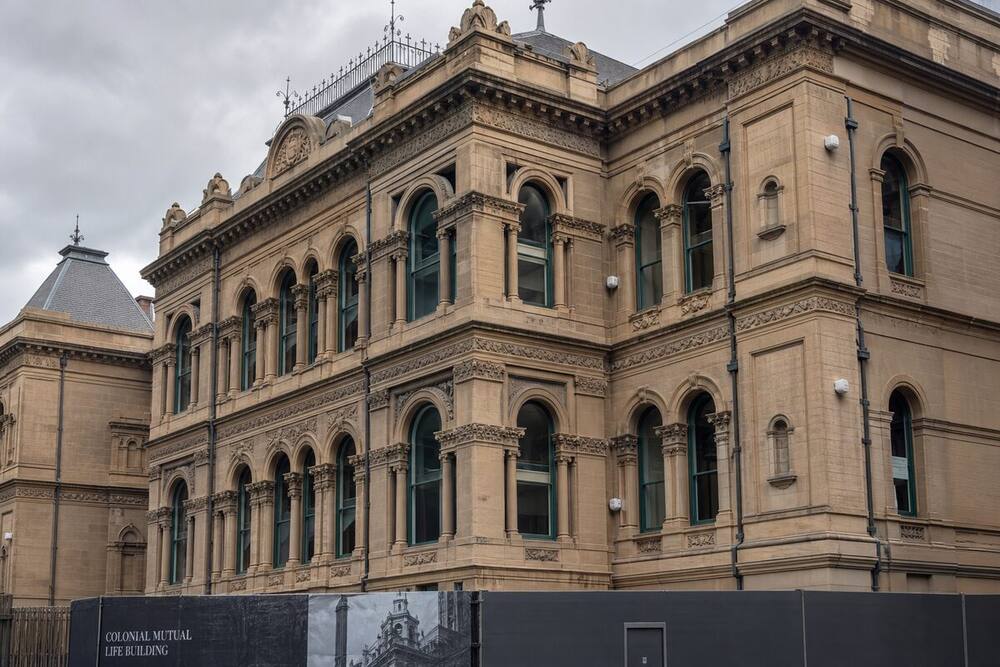
Heritage buildings present a fundamentally different risk profile to modern reinforced concrete or steel-framed structures when adjacent construction activity begins. Unreinforced masonry, lime mortar joints, rubble-stone foundations, and original timber framing lack the ductility and redundancy of contemporary construction, meaning vibration energy that would pass harmlessly through a modern building can initiate or propagate cracking in heritage fabric. The consequences extend beyond repair cost: damage to a heritage-listed place can trigger regulatory obligations under the *Queensland Heritage Act 1992*, attract enforcement action from the Queensland Heritage Council, and permanently compromise the cultural significance the building was listed to protect.
Principal contractors and developers working near heritage-listed places often underestimate how far vibration travels through urban ground conditions. Impact piling, rock breaking, compaction plant, and heavy haulage all generate ground-borne vibration that attenuates with distance but does so at different rates depending on soil type, founding depth, and transmission path. A heritage sandstone church 40 metres from a sheet pile installation in stiff clay may receive peak particle velocities (PPV) that exceed safe working limits for its construction type. Without pre-construction condition documentation and a live monitoring programme, attributing subsequent cracking to construction activity or defending against spurious damage claims becomes practically impossible.
Why Heritage Fabric Behaves Differently Under Vibration
Modern structures are designed to respond to dynamic loading through controlled deformation. Reinforced concrete cracks in a predictable manner; steel connections yield before fracturing. Heritage masonry operates on entirely different principles. Lime mortar in pre-twentieth century brickwork has low tensile strength and relies on compression and gravity for stability. When vibration induces cyclic tensile stress across mortar joints, the bond between mortar and masonry unit fails progressively. Each vibration event that exceeds the elastic limit of the joint advances the crack slightly further.
Unreinforced masonry walls are also susceptible to differential settlement amplification. If vibration from nearby excavation disturbs founding material unevenly, racking stresses develop across the wall plane. Rendered masonry obscures early-stage cracking, meaning visible damage by the time it is reported may represent a crack that has been propagating for weeks. Timber-framed heritage structures carry an additional vulnerability: original mortise-and-tenon joinery, particularly in Queensland colonial-era buildings, may already be loosened through decades of thermal cycling and biological attack. Vibration can displace these connections from equilibrium positions they have occupied for a century.
Applicable Vibration Limits: DIN 4150-3 Line 3
The primary vibration standard applied to heritage building protection in Australian construction monitoring practice is DIN 4150-3, the German standard for structural vibration. Australian Standard AS 2187.2 governs blasting vibration and references cosmetic damage thresholds, but DIN 4150-3 provides a three-line classification that maps to building construction type and is more widely specified in development approval conditions, SARA referral responses, and consultant briefs for sensitive receivers.
Line 3 of DIN 4150-3 applies to buildings that are particularly sensitive to vibration, including heritage structures, buildings with existing damage, and any structure where the principal contractor or heritage advisor has identified unusual vulnerability. The guideline values under Line 3 are substantially lower than those for modern construction:
- Foundation level (1-10 Hz):: 3 mm/s PPV
- Foundation level (10-50 Hz):: 3-8 mm/s PPV (frequency-dependent linear interpolation)
- Foundation level (50-100 Hz):: 8 mm/s PPV
- Horizontal at highest floor:: 2.5 mm/s PPV at all frequencies below 10 Hz
For context, DIN 4150-3 Line 1 permits up to 20 mm/s PPV at the foundation of a modern industrial building in the 10-50 Hz range. Heritage structures operating under Line 3 receive less than half that allowance across most of the relevant frequency band. In practice, SARA referral conditions and site-specific heritage management plans often impose limits more conservative than Line 3, particularly for Category A or early colonial-era listings. Agreed limits should be confirmed with the heritage advisor and documented in the vibration management plan before works commence.
Pre-Construction Condition Surveys
A pre-construction condition survey is the single most important document in a heritage building monitoring programme. It establishes the baseline condition of the building fabric before any adjacent works commence, providing an evidentiary record against which post-construction inspection findings are compared. Without this document, disputes over damage causation are almost unresolvable, and contractors typically bear the cost of doubt.
The survey should be conducted by a suitably qualified building inspector or heritage architect and must be completed before mobilisation of any plant that could generate ground-borne vibration or cause differential settlement. Key deliverables include:
- Photographic record:: High-resolution images of all internal and external faces, with measurement scales at each identified defect
- Crack schedule:: Tabulated record of existing cracks with location, orientation, width (in millimetres), length, and condition (live, dormant, repaired)
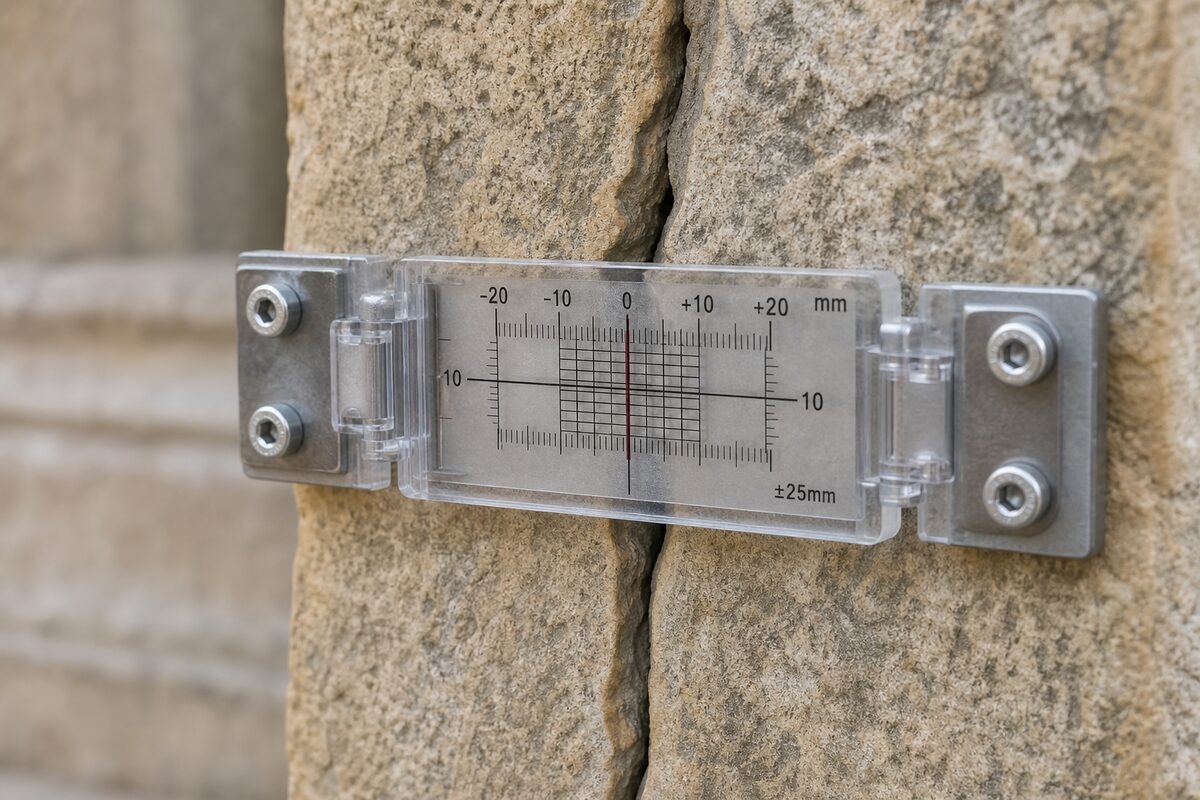
- Crack monitoring datum points:: Physical tell-tale installation or demarcation at active cracks to detect movement during the works period
- Structural observations:: Identification of areas of delamination, bulging, failed pointing, saturated masonry, or compromised timber members
- Services and drainage assessment:: Documentation of existing drainage paths, subfloor conditions, and any services that could be disrupted by nearby excavation
The survey report should be signed by the inspector, dated, and lodged with the principal contractor, developer, and heritage advisor. Where SARA has issued referral conditions requiring heritage building protection, the condition survey may also need to be submitted to the assessing authority as part of compliance documentation.
Sensor Selection for Heritage Fabric Monitoring
Instrumentation for heritage building monitoring must account for two objectives: detecting ground-borne vibration at the structure before it causes damage, and identifying any structural movement or deformation that may indicate the early stages of damage progression. These objectives call for different sensor types deployed at different locations.
Vibration Monitoring
The primary instrument for construction vibration monitoring is a triaxial geophone, which measures velocity in three orthogonal axes and reports PPV. For heritage building monitoring, geophones should be deployed at foundation level as close as practicable to the structure's base, which is the measurement location specified in DIN 4150-3. A second geophone at the highest accessible floor level captures the floor response velocity used in the Line 3 horizontal assessment.
MEMS (microelectromechanical systems) accelerometers are increasingly used in heritage monitoring programmes where low-frequency response below the operating band of standard 4.5 Hz geophones is of interest. Timber-framed structures with flexible floor diaphragms can exhibit resonant response in the 2-5 Hz range, and MEMS devices resolving down to 0.1 Hz or lower capture that behaviour. However, MEMS accelerometers require careful calibration and signal conditioning to produce reliable PPV values, and the geophone remains the accepted reference instrument for compliance reporting against DIN 4150-3 and AS 2187.2.
Real-time monitoring with automated alerting is standard practice on any heritage building monitoring programme of meaningful duration. Continuous logging platforms transmit data via 4G/LTE to a cloud-hosted dashboard where alert thresholds are pre-configured at action levels below the agreed limit. A two-level alert structure is common:
- Action level (typically 75% of limit):: Triggers an automated notification to the site supervisor to review current works and confirm activity type
- Exceedance level (100% of limit):: Triggers immediate works suspension protocol, notification to the monitoring engineer, and requirement for investigation before resumption
Crack and Tilt Monitoring
Vibrationally-induced crack growth and differential settlement produce physical movement in the structure that requires a different sensor category to detect. Crack gauges (also called tell-tales or crack displacement transducers) are installed across identified or monitored cracks and record displacement in millimetres. Electrical crack gauges connected to the same data logger as the geophones allow correlation between vibration events and crack response in near real-time.
Tiltmeters, measuring inclination in millidegrees or microradians, are placed on walls, columns, or structural elements identified by the heritage advisor as vulnerable to racking or out-of-plane movement. A tiltmeter reading that begins trending incrementally between vibration events is one of the clearest early indicators of progressive settlement or loss of bearing, allowing intervention before visible cracking appears. Typical resolution for tiltmeters used in heritage SHM applications is 0.001 degrees or better.
For heritage buildings where the overall geometry needs to be captured at intervals, terrestrial LiDAR scanning provides a three-dimensional point cloud that can be compared between scan epochs to detect millimetre-scale deformation across entire facades. This is particularly useful for buildings where internal access is restricted, or where the fabric is too fragile to support multiple contact sensors. LiDAR survey at pre-construction, mid-construction, and post-construction stages produces an objective spatial record independent of individual sensor placement decisions.
Data Interpretation and Reporting Obligations
Raw vibration data must be interpreted by a monitoring engineer who understands both the measurement standard and the construction type being protected. PPV alone does not determine damage potential: the frequency content of the vibration event, the duration of exposure, and the condition of the existing fabric are all relevant. DIN 4150-3 uses frequency-weighted limits precisely because low-frequency vibration at equivalent PPV carries more structural energy and is more likely to excite natural frequencies in masonry walls.
Monitoring reports should be issued at intervals agreed in the vibration management plan, typically weekly during active works, with immediate event reports issued following any exceedance. Each report should include:
- Summary of construction activities: for the reporting period, correlated against the vibration record
- Peak event listing: with date, time, PPV, dominant frequency, and source activity
- Crack gauge and tiltmeter readings: with trend plots over the reporting period
- Any alert or exceedance events: with response actions taken and outcomes
- Certification: that the monitoring programme has been conducted in accordance with the agreed management plan
Where SARA referral conditions are attached to a development approval, compliance reporting may need to be submitted to SARA on a defined schedule. Queensland Heritage Act enforcement is taken seriously by the Queensland Heritage Council, and a well-maintained monitoring record is the principal contractor's primary defence against retrospective damage claims and potential statutory enforcement.
Coordination with Heritage Advisors and SARA
Heritage building monitoring does not operate in isolation from the heritage management framework that governs work on or near listed places. SARA (State Assessment and Referral Agency) assesses applications for development adjacent to Queensland Heritage Register places where the development is a referable activity under the *Planning Act 2016*. Referral conditions typically require preparation of a heritage impact assessment and, where vibration risk is identified, a vibration management plan endorsed by a Registered Professional Engineer of Queensland (RPEQ).
The monitoring engineer's role in this process is technical, not administrative, but effective programme design requires early engagement with the heritage advisor appointed by the development proponent. The heritage advisor brings knowledge of the building's construction history, known vulnerabilities, previous repair campaigns, and the significance attributes that must be preserved. That knowledge directly informs sensor placement: a heritage advisor who knows that a particular sandstone wall is already delaminating at high level is providing information that determines whether a tiltmeter goes at mid-height or at the top course.
Practical coordination points for the monitoring engineer include:
- Review the Statement of Significance: to understand which elements are most culturally important and therefore most in need of instrumentation priority
- Attend pre-construction meetings: with the heritage advisor, principal contractor, and structural engineer to agree monitoring scope, trigger levels, and response protocols
- Share live data access: with the heritage advisor where practicable, so they can observe trends directly rather than waiting for scheduled reports
- Document all communications: regarding heritage condition observations, including informal site walk findings, in a format suitable for regulatory review
SARA referral conditions may also require notification to the Queensland Heritage Council if monitoring data indicates a threshold exceedance, or if post-construction inspection reveals new damage not present in the pre-construction survey. Understanding these obligations before works commence allows the monitoring team to build the necessary notification workflow into the reporting system rather than constructing it under pressure after an event.
Conclusion
Heritage building monitoring adjacent to construction is a technical discipline that combines structural dynamics, materials knowledge, regulatory awareness, and field instrumentation. The sensitivity of unreinforced masonry, lime mortar, and aged timber framing to vibration is well established in the literature and in the damage thresholds of DIN 4150-3 Line 3. Those limits exist because heritage fabric does not behave like modern construction, and monitoring programmes that apply standard residential thresholds to heritage receivers are not fit for purpose.
A correctly scoped programme begins before the first piece of plant enters the site, with a thorough condition survey and an agreed vibration management plan endorsed by an RPEQ and reviewed by the heritage advisor. Triaxial geophones, crack gauges, tiltmeters, and where appropriate LiDAR scanning provide the measurement layers needed to detect risk before damage occurs and to document outcomes objectively. Coordination with SARA and the heritage advisor is not a compliance formality but an integral part of programme design.
Oculus Technology deploys heritage building monitoring programmes across South East Queensland and regional areas, working within SARA referral conditions and Queensland Heritage Council requirements. For advice on monitoring scope, sensor selection, or vibration management plan preparation for a heritage-adjacent construction project, visit [oculustech.au/services/heritage-building-monitoring](https://oculustech.au/services/heritage-building-monitoring).
Need monitoring for your project?
Share your site context, approval conditions, and project timeline. We'll respond with a practical monitoring scope within 24 hours.
Request a Scope