Dust Monitoring on Construction Sites: PM2.5, PM10, and Compliance
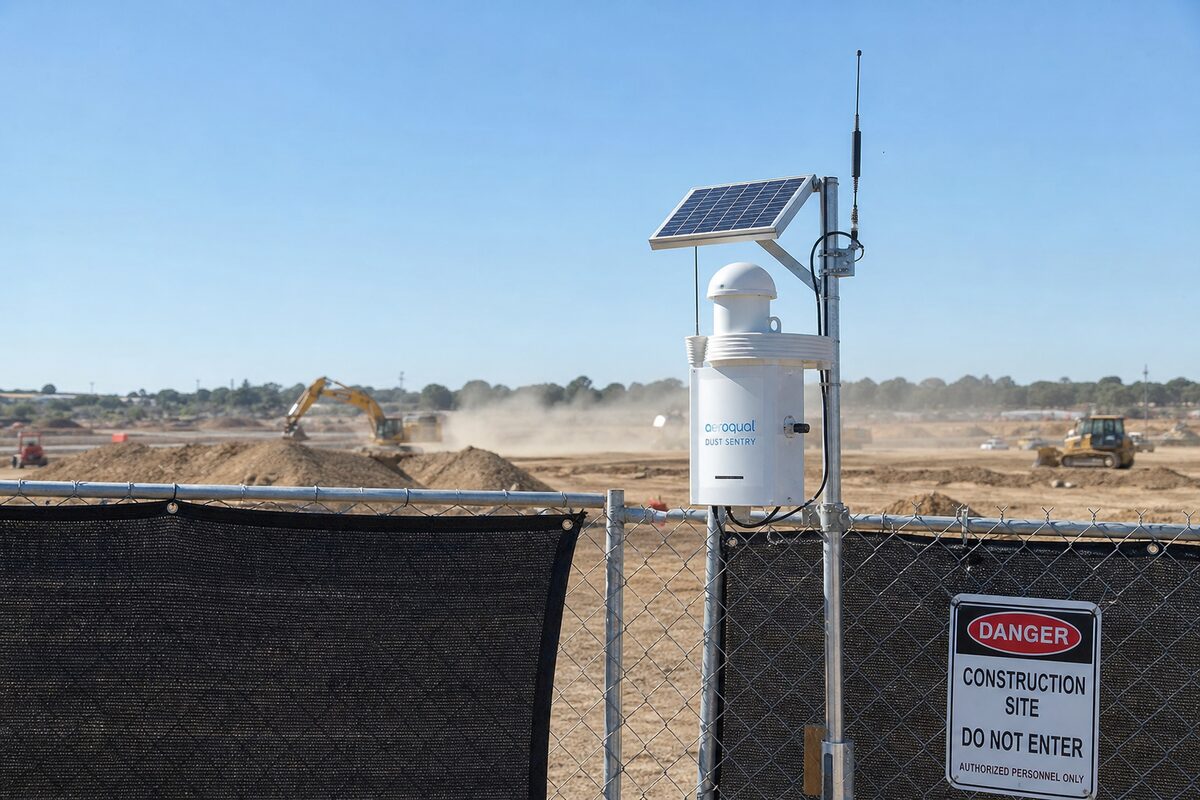
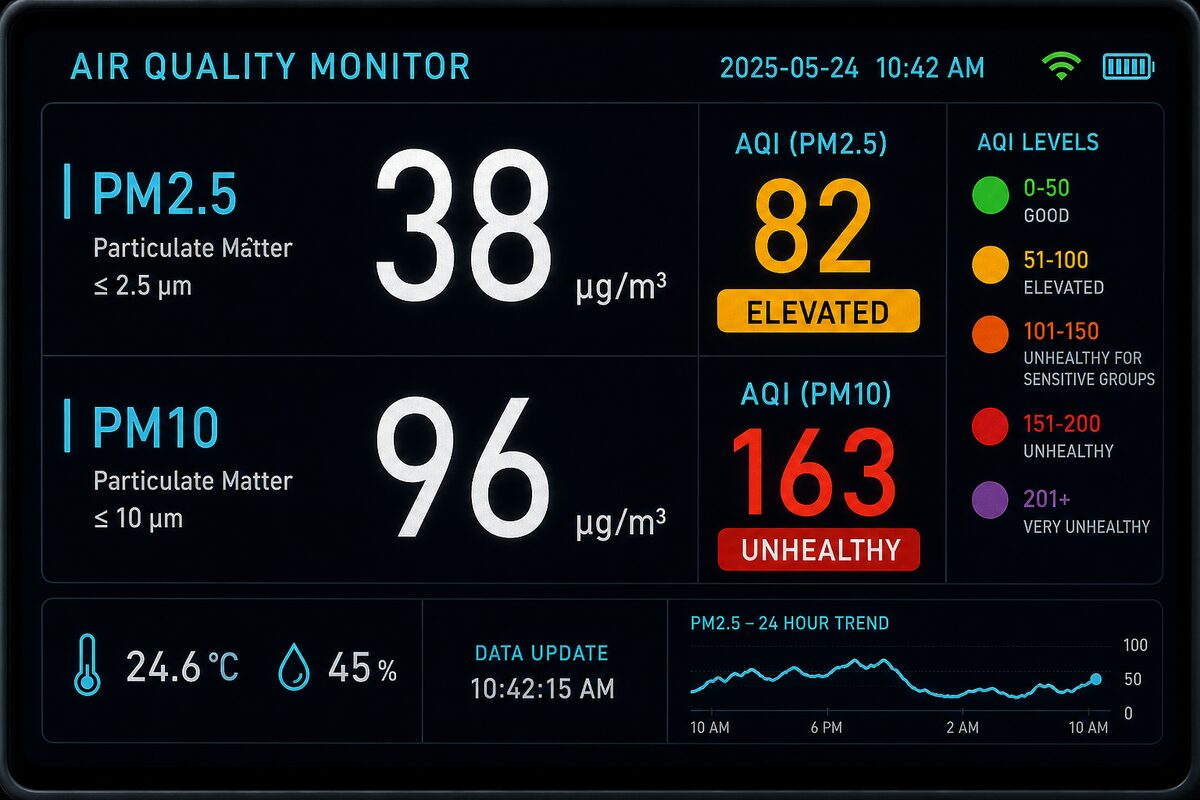
Airborne particulate matter generated by construction activity represents one of the more difficult compliance challenges on live sites. Unlike vibration or noise, where exceedances are typically discrete events tied to specific plant operations, dust is cumulative, dispersive, and highly sensitive to meteorological conditions that sit entirely outside a project's control. Queensland's regulatory framework under the *Environmental Protection Act 1994* and Environmental Authority (EA) conditions issued by the Department of Environment and Science (DES) sets binding limits on PM10 and PM2.5 concentrations at sensitive receptors, and principal contractors are expected to demonstrate ongoing compliance through instrumented monitoring rather than visual observation alone.
The measurement units that matter here are micrograms per cubic metre (µg/m³), applied as both 24-hour averaging periods and annual means. The National Environment Protection Measure (NEPM) for Ambient Air Quality sets a 24-hour standard of 50 µg/m³ for PM10 and 25 µg/m³ for PM2.5, with annual standards of 25 µg/m³ and 8 µg/m³ respectively. DES Environmental Authorities for construction projects in Queensland will typically reference these NEPM standards directly, though some EAs impose tighter site-specific trigger levels depending on receptor sensitivity, project duration, and proximity to schools, hospitals, or residential areas. Understanding how your monitoring equipment measures against these thresholds is the starting point for any credible dust management programme.
Measurement Methods: Nephelometers vs Beta Attenuation Monitors
The two instrument types most commonly deployed on construction sites are nephelometers and beta attenuation monitors (BAMs), and they serve different but complementary functions. Choosing the wrong instrument for the wrong purpose creates compliance gaps that DES auditors will find quickly.
Nephelometers for Real-Time Operational Control
Nephelometers measure particulate concentration by detecting the scattering of a light beam as it passes through sampled air. Modern optical particle counters used in construction monitoring can report PM1, PM2.5, PM10, and total suspended particles (TSP) simultaneously, with data outputs as frequent as one-minute averages. This real-time capability makes nephelometers the appropriate tool for operational dust management: when concentrations at the site boundary climb toward a trigger threshold, site supervisors can receive an automated alert via SMS or dashboard notification and act immediately by deploying water carts, ceasing earthworks, or implementing haul road suppressants.
Equipment in this category includes instruments such as the Aeroqual AQS 1 and the Met One E-BAM Lite, though deployment configuration matters more than brand selection. Nephelometers require calibration against gravimetric reference methods to ensure the optical response factor is appropriate for the particle size distribution and composition specific to your site. Clay-heavy cut material scatters light differently to silica-rich fill or demolition dust. An uncalibrated nephelometer running a default factory response factor can underread or overread by 30-40%, which is a material compliance risk.
Beta Attenuation Monitors for Reference-Grade Compliance Data
BAMs operate by collecting particulate matter on a filter tape and measuring the attenuation of beta radiation through the collected sample. The technique is gravimetrically traceable, meaning BAM data is defensible as reference-method measurement under the NEPM and is accepted by DES as compliance-grade evidence. The trade-off is that BAMs typically report on a one-hour or 24-hour averaging basis, providing no real-time operational feedback. They are also more expensive to procure and maintain, requiring regular filter tape replacement, flow calibration, and temperature/RH compensation.
On most construction projects, the practical approach is to run nephelometers for operational control at the site boundary and deploy a BAM at the most sensitive receptor location for compliance reporting. The BAM data anchors your compliance position; the nephelometers drive your day-to-day dust management decisions. Where EA conditions specifically require reference-method monitoring, BAM deployment is non-negotiable regardless of cost.
EPA Trigger Levels and How They Are Structured
Queensland EA conditions for construction projects typically establish a tiered trigger framework rather than a single hard limit. A common structure involves:
- Investigation Level:: A lower threshold (often 40-45 µg/m³ as a 24-hour PM10 mean) at which the EA holder must investigate whether site activities contributed to the reading and document findings
- Action Level:: A mid-range threshold at which specific mitigation measures must be implemented and documented within a defined response window
- Exceedance Level:: The NEPM limit (50 µg/m³ for 24-hour PM10) at which formal reporting to DES is triggered, regardless of whether site activity was the cause
This tiered approach is important because wind-blown dust from regional sources, bushfire smoke, and traffic on unsealed roads can push background concentrations above action levels independently of any construction activity. Demonstrating that an exceedance was not caused or materially contributed to by site activity requires contemporaneous meteorological data, specifically wind speed, wind direction, and atmospheric stability, correlated with the dust concentration time series. Running monitoring without a co-located weather station undermines your ability to make that defence.
Dust Management Plans Under Queensland Frameworks
A Dust Management Plan (DMP) is a condition of most construction EAs in Queensland and is typically also required under local government development approval conditions for projects assessed by Brisbane City Council (BCC) or referred to the State Assessment and Referral Agency (SARA). The DMP is not a static document: it must be reviewed and updated as site works progress through different phases, because earthworks, piling, demolition, and concrete cutting each generate different particle size distributions and require different suppression approaches.
A compliant DMP should address:
- Source inventory:: Identification of all dust-generating activities on the programme, including haul roads, stockpiles, batters, demolition works, and dry cutting
- Meteorological thresholds:: Wind speed limits above which specific activities are suspended (typically 15-25 km/h for exposed earthworks, though EA conditions may specify lower limits)
- Suppression measures:: Water carts, chemical suppressants, hessian covers for stockpiles, wheel wash facilities, and sealed haul roads
- Monitoring trigger response:: Documented escalation procedures that translate instrument readings into supervisor actions within defined timeframes
- Corrective action records:: A register of every trigger event, the response taken, and the outcome, which forms the primary evidence base during a DES audit
The DMP should be reviewed by the project's environmental representative and cross-referenced against the EA conditions before works commence. Generic DMPs lifted from previous projects routinely miss site-specific trigger levels, receptor distances, and EA-specific reporting obligations.
Site Boundary Monitoring Placement
Instrument placement is where many dust monitoring programmes fail technically, even when the equipment selection is correct. The goal of boundary monitoring is to measure the dust impact on sensitive receptors, which means instruments need to be positioned to intercept the downwind plume from site activities as it approaches the boundary, not positioned for convenience or security.
The following placement principles apply:
- Receptor-oriented positioning:: Identify the most sensitive receptor (nearest residence, school, or healthcare facility) and position the primary monitor on the boundary between that receptor and the site's main dust-generating area
- Multiple boundary stations:: For sites with receptors in more than one direction, a single monitor is inadequate. Most Queensland EAs for major construction projects require a minimum of two to four boundary stations with locations defined in the EA conditions themselves
- Height:: Instruments should be mounted at 1.5-3.0 metres above ground level to sample the breathing zone concentration rather than ground-level resuspension, unless EA conditions specify otherwise
- Obstruction clearance:: Avoid placement within 2 metres of solid barriers, vegetation, or structures that would create turbulence artefacts in the sample
- Access for maintenance:: Instruments on live construction sites are exposed to vibration, physical damage, and soiling. Mounting locations need to permit regular maintenance without requiring traffic management or confined space entry
On linear infrastructure projects such as road upgrades under TMR's MRTS programme, monitoring stations need to relocate progressively along the works corridor, with location updates formally recorded and communicated to DES where EA conditions reference fixed monitoring coordinates.
Wind Direction and Meteorological Integration
Dust concentration at a fixed boundary monitor is a function of source strength, particle size, terrain, atmospheric stability, and wind vector. Without knowing wind direction at the time of each reading, it is impossible to determine whether a boundary exceedance is attributable to site activity. This is not an optional analytical refinement; it is a basic requirement for compliance defence and EA reporting.
A co-located meteorological station at the primary monitoring position should capture at minimum:
- Wind speed:: At 10-metre hub height where feasible, reported as 10-minute averages (consistent with BoM surface observation standards)
- Wind direction:: Vector-averaged over the same 10-minute periods, with standard deviation reported as a stability indicator
- Temperature and relative humidity:: Required for BAM temperature compensation and for contextualising PM hygroscopic behaviour in humid conditions
- Rainfall:: Important for identifying natural suppression periods and for screening data where precipitation may have artificially depressed readings
The standard analytical output is a wind rose correlated with high-concentration events, often presented as a pollution rose, which maps the relationship between elevated PM readings and wind direction. If high concentrations consistently occur with winds from the site's primary working areas, the evidence for site attribution is strong. If high readings correlate with winds from external roads or industrial areas upwind, you have the basis for a credible non-attribution argument.
When Exceedances Occur: Obligations Under Queensland Environmental Authorities
An exceedance of an EA threshold triggers specific regulatory obligations that do not depend on whether site activity caused it. Most Queensland EAs require written notification to DES within 24 hours of becoming aware of a confirmed exceedance, followed by a more detailed incident report within five to ten business days depending on the EA conditions. The incident report must describe the exceedance, its likely cause, any immediate mitigation actions taken, and proposed corrective measures to prevent recurrence.
Failure to notify within the required timeframe is itself a separate breach of the EA, independent of the original exceedance. DES has the authority to issue environmental protection orders, direct the suspension of works, and in serious or repeated cases, pursue prosecution under the *Environmental Protection Act 1994*. On projects where the EA is held by the developer rather than the contractor, a contractual notification chain needs to be in place so that exceedances are communicated up to the EA holder without delay.
Practically, the most effective response to an exceedance combines immediate site-level action with documented evidence of that action. Deploying water carts within 30 minutes of an alert, ceasing exposed earthworks, or increasing haul road suppression frequency needs to be recorded with timestamps, plant numbers, and volumes applied. That operational record is the difference between a DES inquiry that closes on paper and one that escalates to formal enforcement.
Building a Defensible Monitoring Programme
Dust monitoring on construction sites is fundamentally an evidence-collection exercise. The instrumentation generates the data; the programme design, calibration records, meteorological integration, and documented response procedures determine whether that data is defensible under regulatory scrutiny. A nephelometer running on default factory calibration, mounted on a fence post in a wind shadow, with no weather station and no formal response procedure, provides readings that are nearly impossible to use in your defence when DES asks questions.
Oculus Technology designs and deploys dust monitoring networks for construction projects across Queensland and South-East Queensland, including major infrastructure corridors, high-rise residential developments, and industrial demolition programmes. Our deployments integrate nephelometers and BAMs with co-located met stations, automated alert systems, and data portals that produce EA-ready compliance reports in the format DES auditors expect. If your project is approaching groundworks or demolition phases, establishing a calibrated, placement-correct monitoring programme before works commence is substantially more cost-effective than managing an EA breach response after the fact.
[Learn more about our dust and air quality monitoring services at oculustech.au/services/dust-monitoring](https://oculustech.au/services/dust-monitoring)
Need monitoring for your project?
Share your site context, approval conditions, and project timeline. We'll respond with a practical monitoring scope within 24 hours.
Request a Scope