What Is Structural Health Monitoring? A Complete Guide for Asset Owners
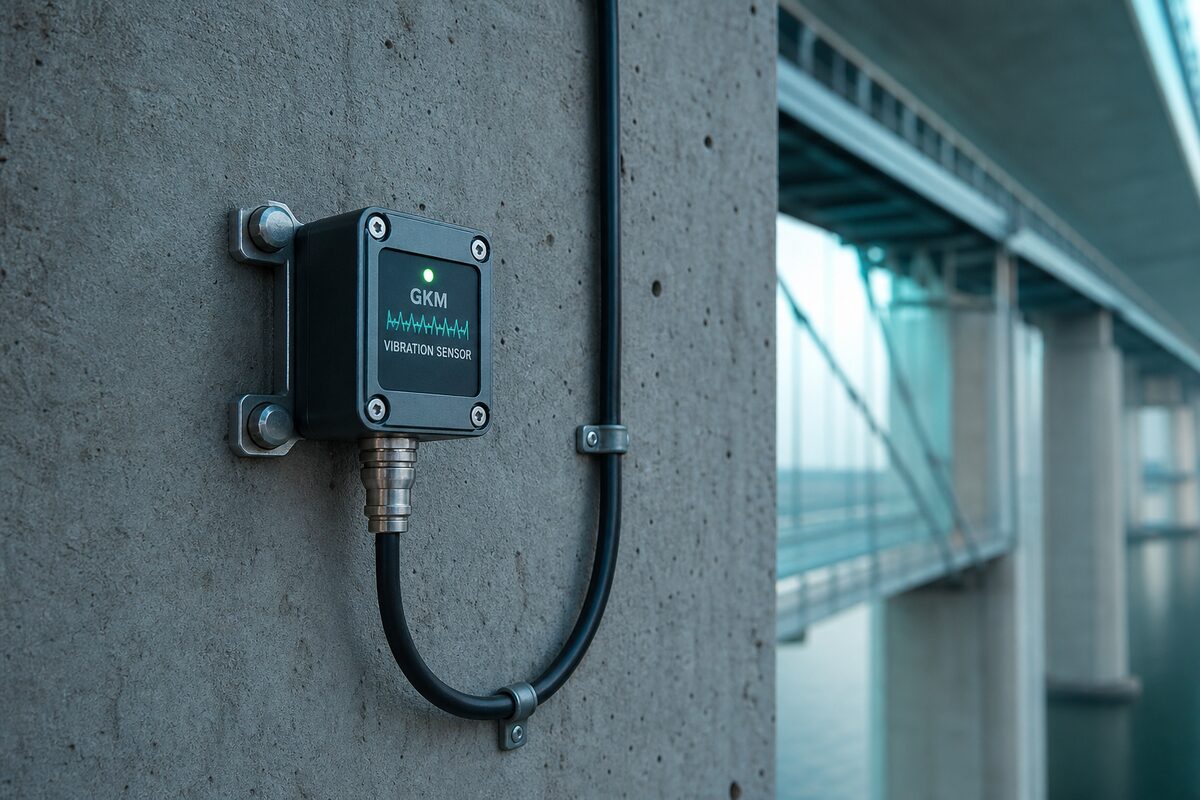

Structural health monitoring (SHM) is the practice of embedding or attaching instrumentation to a structure so that its physical condition can be tracked continuously or at defined intervals over time. Rather than relying on periodic visual inspection alone, SHM captures measurable changes in strain, displacement, vibration, tilt, and crack width that are invisible to the naked eye and often precede visible deterioration by months or years. For bridges, high-rise buildings, retaining walls, tunnels, and other civil infrastructure, this data forms an objective, time-stamped record of how a structure responds to load, environmental variation, and accumulated fatigue.
The discipline draws on ISO 13374, which establishes the data processing, communication, and presentation requirements for condition monitoring of machines and structures. In Australian practice, SHM programmes for construction-affected assets typically operate alongside vibration compliance monitoring under AS 2187.2 and DIN 4150-3, while purpose-built infrastructure monitoring programmes follow guidance from asset owners including TMR, QR, and BCC. The distinction matters: compliance monitoring is usually short-term and event-driven, whereas SHM is a long-term observational programme that builds a baseline and tracks change against it.
Asset owners increasingly specify SHM at the development approval stage, particularly where new construction adjoins heritage structures, tunnels, or operationally critical infrastructure. Queensland's State Assessment and Referral Agency (SARA) routinely attaches SHM conditions to development approvals for projects within the referral footprint of state-controlled roads and rail corridors. Understanding what an SHM system actually measures, how the data flows, and when alerts are generated is essential knowledge for principal contractors, asset owners, and project managers who carry responsibility for those conditions.
The Core Principle: Measuring Structural Response
A structure under load deforms. That deformation, whether it is bending in a bridge deck, settlement in a foundation, or lateral drift in a tower, follows predictable physical relationships described by structural mechanics. SHM instruments measure those deformations directly or measure the forces and accelerations that produce them. The critical insight is that a change in a structure's response to a known or repeatable load indicates a change in the structure itself, whether from cracking, corrosion, foundation movement, or fatigue damage.
This is why baseline establishment is the first and most important phase of any SHM programme. Before construction activity begins, or before a new loading regime is applied, the monitoring system records the structure's ambient behaviour across a full range of conditions: temperature cycles, traffic loading, wind, and seasonal groundwater variation. That baseline defines the envelope of normal behaviour. Subsequent measurements are then interpreted relative to it, and deviations are assessed against predefined thresholds.
Temperature effects deserve particular attention because nearly every structural parameter changes with temperature. Steel expands and contracts at roughly 12 microstrain per degree Celsius. Concrete creep and shrinkage are temperature-dependent. Tiltmeters respond to thermal gradients across their mounting surface. Any SHM system that does not capture temperature alongside structural parameters will produce data that is difficult to interpret and prone to false alerts.
Sensor Types and What They Measure
Accelerometers and Geophones
MEMS accelerometers and triaxial geophones are the sensors most commonly associated with vibration monitoring, but they serve a structural function in SHM that goes beyond measuring peak particle velocity (PPV) in mm/s against the limits in DIN 4150-3 Part 3 or AS 2187.2. In SHM, accelerometers are used for operational modal analysis (OMA), a technique that extracts a structure's natural frequencies, mode shapes, and damping ratios from its response to ambient excitation such as traffic or wind. These modal parameters are sensitive indicators of structural change: a reduction in natural frequency can indicate a reduction in stiffness, which may result from cracking, section loss, or connection failure.
MEMS accelerometers offer high sensitivity at low frequencies, which makes them appropriate for monitoring long-span bridges, towers, and large-floor-plate buildings where the fundamental frequency may be below 1 Hz. Triaxial configurations capture motion in all three orthogonal directions simultaneously, which is necessary when the direction of the governing structural response is not known in advance. For high-frequency applications such as monitoring machinery-induced vibration in industrial structures, piezoelectric accelerometers provide the required bandwidth and dynamic range.
Strain Gauges
Strain gauges measure the deformation of a structural element at the point of attachment, expressed in microstrain (µε). A standard resistance-type foil strain gauge bonded to a steel member measures the change in electrical resistance as the member elongates or compresses under load. Vibrating wire strain gauges are preferred for long-term SHM installations because they are thermally stable, immune to lead resistance errors, and can retain data integrity over cable runs of hundreds of metres without signal amplification.
In bridge SHM, strain gauges are typically placed at mid-span on primary girders, at support sections where shear is highest, and at connection points where fatigue is a known failure mode. In buildings, they are deployed on columns and transfer structures where load redistribution during excavation or adjacent construction may induce unexpected stress. The data from strain gauges, combined with temperature sensors, allows the monitoring engineer to separate thermally induced strain from mechanically induced strain, which is essential for accurate interpretation.
Tiltmeters
Tiltmeters measure angular rotation, typically expressed in millidegrees or microradians, and are among the most sensitive instruments available for detecting foundation movement, retaining wall rotation, and differential settlement. Servo-accelerometer tiltmeters achieve resolutions below 1 microradian and are appropriate for monitoring heritage facades, bridge abutments, and sheet pile walls adjacent to deep excavations. MEMS-based tiltmeters offer lower cost and acceptable performance for monitoring at resolutions in the range of 0.01 millidegrees.
Correct installation is critical. Tiltmeters must be mounted on a stable substrate that is structurally continuous with the element being monitored. A tiltmeter bolted to a brick veneer panel will measure the veneer, not the underlying structure. For retaining walls, the preferred mounting location is on the primary structural element, with the sensor axis oriented to capture the expected direction of rotation. Where biaxial tiltmeters are used, both axes are logged simultaneously to detect rotational components that a single-axis instrument would miss.
Displacement Transducers and Crack Gauges
Linear variable differential transformers (LVDTs) and wire-draw displacement transducers measure absolute or relative displacement between two points. LVDTs are suited to applications where the displacement range is small (sub-millimetre to a few millimetres) and high resolution is required, such as monitoring joint movement in post-tensioned concrete decks. Wire-draw transducers accommodate larger displacement ranges, from 10 mm to several hundred millimetres, and are commonly used to monitor settlement markers, crack widths in concrete retaining walls, and convergence in tunnels.
Crack gauges, or crack displacement transducers, measure the width of an existing crack at the gauge location. They are installed by bridging the crack with the instrument body, with one end fixed to each side of the crack. Digital crack gauges with data logging capability can resolve changes of 0.01 mm, which allows early detection of crack propagation well before it reaches a width that would typically trigger a maintenance response. In practice, SHM programmes for heritage masonry buildings often combine crack gauges at known defect locations with tiltmeters at the wall base and accelerometers at the roof level to build a multi-parameter picture of structural behaviour.
Data Acquisition Systems and IoT Integration
The raw output from sensors is an analogue or digital signal that must be conditioned, digitised, timestamped, and transmitted to a location where it can be stored and interpreted. A data acquisition system (DAQ) performs signal conditioning (filtering, amplification, excitation for passive sensors) and analogue-to-digital conversion at a defined sample rate. Sample rate selection is governed by the Nyquist criterion: the sample rate must be at least twice the highest frequency of interest. For structural modal analysis, a sample rate of 100 Hz is typically adequate for civil structures. For high-frequency vibration events, sample rates of 1,000 Hz or higher may be required.
Modern SHM systems transmit data via cellular (4G/5G), LoRaWAN, or direct Ethernet to cloud-hosted databases. IoT-enabled loggers allow remote configuration, real-time data access, and automated alerting without requiring a field technician to physically download data from each unit. This architecture aligns with the data communication requirements in ISO 13374-2, which addresses the transfer of condition monitoring data between systems. For construction projects in Queensland, where sensor networks may span multiple kilometres along a rail corridor or road alignment, cellular-based transmission with local data buffering is the standard approach because it avoids the cable infrastructure costs associated with wired networks across active construction sites.
Data storage and management should be planned from the outset. A network of 40 sensors sampling at 100 Hz across three channels generates substantial data volumes over a multi-year programme. Time-series databases optimised for sensor data, such as those using the InfluxDB or similar schema, handle high write rates efficiently and support the time-windowed queries that monitoring engineers use for trend analysis and event investigation.
Threshold Setting and Alert Logic
Thresholds are the predefined values at which the monitoring system generates an alert, requiring a response from the engineering team. Setting thresholds correctly is a matter of engineering judgement informed by the baseline data, the structural assessment of the asset, and the consequences of exceedance. Thresholds set too conservatively generate frequent false alerts that erode confidence in the system and cause alert fatigue. Thresholds set too permissively may allow genuine structural change to progress undetected.
Alert Levels
Most SHM programmes operate with a tiered alert structure:
- Green (normal):: All parameters within baseline envelope. No action required. Data logged automatically.
- Amber (watch):: A parameter has exceeded the first-level threshold. The monitoring engineer reviews the data, assesses context (e.g., an unusually heavy traffic event), and determines whether the exceedance is a structural concern or an external cause.
- Red (action):: A parameter has exceeded the second-level threshold. Immediate engineering review is required. Depending on the asset and the parameter, this may trigger a hold on adjacent construction activities, an engineer-of-record inspection, or load restriction.
For vibration monitoring under DIN 4150-3, thresholds are expressed in mm/s PPV at defined frequencies. For structural SHM, thresholds are typically expressed in microstrain, millidegrees, millimetres of displacement, or percentage change in natural frequency. The ISO 13374 framework allows these thresholds to be encoded in the data management system so that alerts are generated automatically when stored values exceed defined limits.
Temperature-Corrected Thresholds
Because temperature drives apparent changes in strain, tilt, and displacement that are not structural in origin, best practice is to apply temperature-corrected thresholds rather than fixed absolute values. This involves establishing the regression relationship between temperature and each structural parameter during the baseline period, then applying that relationship to convert measured values to temperature-corrected residuals. Alerts are then triggered on the residual, which represents structural change after thermal effects are removed.
When to Implement SHM
The question of when SHM is warranted is partly a technical question and partly a risk management question. ISO 13374 does not prescribe specific triggering conditions, but industry practice and the experience of Australian asset owners suggest several situations where SHM should be specified from the outset.
Adjacent deep excavation: Any excavation that extends below the founding depth of adjacent structures within a 1:1 influence zone warrants continuous tiltmeter, crack gauge, and settlement monitoring. Queensland's SARA conditions for developments near state infrastructure frequently mandate this.
Construction-induced vibration: Where blasting or mechanical breaking will occur within distances that place ground vibration above 5 mm/s PPV at an adjacent sensitive structure, continuous vibration monitoring per AS 2187.2 and a pre-construction SHM baseline are appropriate minimum responses.
Ageing or deficient infrastructure: Bridges and buildings that carry reduced load ratings, have known section loss from corrosion, or have experienced previous incidents (collision, flood, fire) benefit from SHM because it provides continuous observation between periodic inspection cycles.
Heritage and architecturally significant buildings: Heritage-listed structures typically cannot be strengthened or modified freely. SHM provides the early warning capability that allows protective action before damage occurs, which is a more defensible position for developers and contractors than relying solely on pre- and post-construction condition surveys.
Operational critical infrastructure: Assets where failure or closure causes significant economic or safety consequences, including rail bridges, major road structures, and water supply infrastructure, are appropriate candidates for permanent SHM installations.
Post-event assessment: Following a flood, earthquake, vehicle impact, or fire, SHM can be commissioned rapidly to provide continuous data while the engineering assessment is underway, supporting decisions about operational status.
Data Interpretation and Reporting
Raw sensor data is not a structural assessment. The role of the monitoring engineer is to interpret the data in the context of the structure's design, material properties, loading history, and environment. This requires access to as-built drawings, geotechnical reports, and design load data, as well as an understanding of the expected structural behaviour.
Reporting frequency depends on the programme type. For construction-adjacent monitoring, weekly automated summary reports with exception reporting for threshold exceedances are standard. For long-term infrastructure SHM, monthly or quarterly reports are more appropriate, with annual review of thresholds and baseline models. Reports should present time-series plots of each parameter alongside temperature, clearly identify any exceedances, explain the cause where it can be determined, and provide a clear statement of structural condition relative to the established baseline.
ISO 13374-3 addresses the presentation layer of condition monitoring systems, including the requirements for data visualisation and report generation. For asset owners and project managers who are not monitoring specialists, the presentation of SHM data matters as much as the data itself. A dashboard that shows a tiltmeter reading of 0.43 millidegrees means little without context; the same reading shown against a threshold of 1.0 millidegrees and a baseline trend line tells a clear story.
Integrating SHM with LiDAR and Reality Capture
Sensor-based SHM captures change at discrete points. Terrestrial LiDAR scanning captures the full three-dimensional geometry of a structure at a point in time. When integrated, periodic LiDAR surveys provide a spatial context for sensor data and can detect surface deformation, deflection, and settlement across the entire structure rather than at instrument locations only. For large bridges and retaining walls, combining monthly LiDAR surveys with continuous sensor monitoring gives asset owners a picture of structural behaviour that neither technique provides alone.
At Oculus Technology, our [structural health monitoring programmes](/services/structural-health-monitoring) integrate sensor networks with periodic LiDAR reality capture to provide both continuous data and spatial verification of structural condition. This combination is particularly effective for long linear assets such as bridge approaches, where settlement may be gradual and distributed across a section that falls between sensor locations.
Conclusion
Structural health monitoring is an engineering discipline grounded in sensor physics, structural mechanics, and data management. It is not a surveillance system or a substitute for structural assessment; it is a continuous observational programme that provides objective evidence of how a structure behaves over time and under varying conditions. When designed correctly, with an appropriate sensor selection, a well-established baseline, temperature-corrected thresholds, and clear reporting protocols aligned with ISO 13374, SHM gives asset owners the information they need to make timely, evidence-based decisions about maintenance, load management, and risk.
For Queensland projects subject to SARA, TMR, QR, or BCC conditions, SHM is increasingly a contractual obligation rather than an optional risk management measure. Engaging a monitoring specialist at the project planning stage, before sensor positions are fixed by construction sequencing constraints, is the most practical way to ensure a system that delivers reliable data throughout the monitoring programme. The cost of a properly designed SHM system is small relative to the cost of an undetected structural defect in an operational asset.
Need monitoring for your project?
Share your site context, approval conditions, and project timeline. We'll respond with a practical monitoring scope within 24 hours.
Request a Scope