
Monitoring Services
Engineering-Led Monitoring Across the Full Project Lifecycle
Oculus designs practical monitoring systems for construction and infrastructure teams who need reliable data, clear thresholds, and defensible compliance outcomes.
When Monitoring Is Essential
Monitoring is often required by approval conditions, but the best projects use it as a proactive risk tool. Real-time data can detect movement or exceedances before they become cost events.
Oculus supports major builders, consultants, and owners with practical systems that satisfy compliance needs while giving project teams a clearer operational picture day-to-day.
Typical Triggers
- ›SARA or local authority conditions
- ›Rail or transport corridor works
- ›Heritage and adjoining property protection
- ›High-risk excavation or piling phases
- ›Risk transfer and insurance requirements
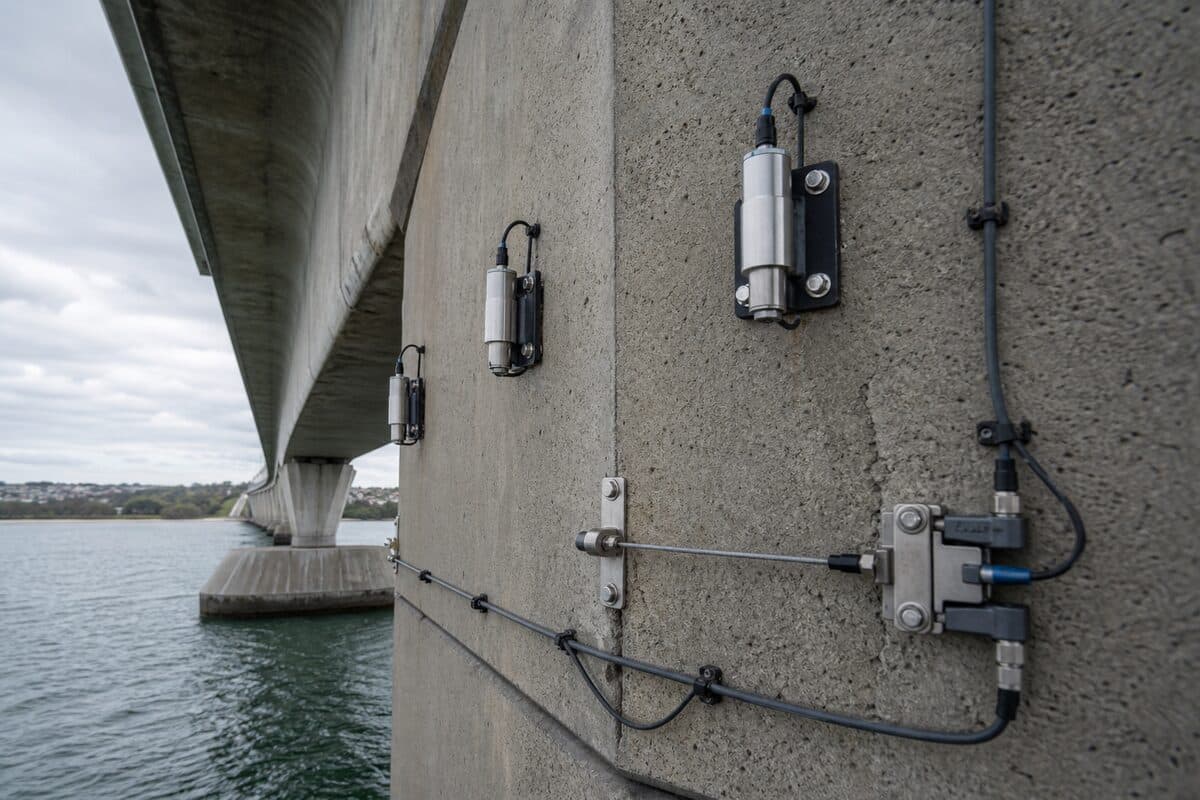
Continuous assessment of your critical assets
Structural Health Monitoring
Structural health monitoring provides real-time insight into the condition of your built assets. By deploying a network of precision sensors, including accelerometers, tiltmeters, crack gauges, and strain sensors, we track structural behaviour continuously, 24 hours a day.
Our RPEQ-registered engineers design each monitoring system to address your specific concerns: whether it is long-term degradation of a heritage bridge, movement in a high-rise during adjacent excavation, or settlement monitoring during tunnelling works.
All data feeds into our centralised IoT platform with automated threshold alerts, trend analysis, and compliance reporting. Our engineers interpret the data, not just collect it, so you receive actionable insights rather than raw numbers.
Key Features
- ›Real-time 24/7 continuous data acquisition
- ›Automated threshold alerts via SMS and email
- ›RPEQ-designed monitoring management plans
- ›Cloud-based dashboard with live visualisations
- ›Compliance reporting for SARA, BCC, TMR, QR
- ›Long-term trend analysis and predictive insights
Sensor Types
Applications
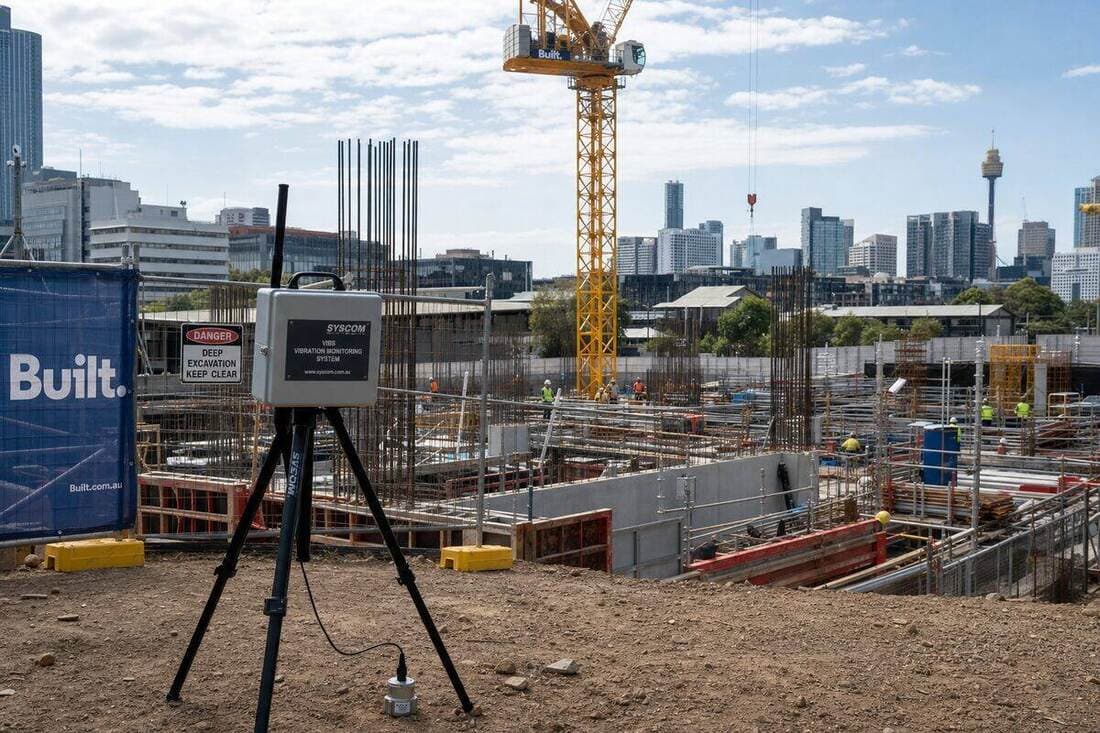
Protect assets and ensure compliance during construction
Construction Monitoring
In Queensland, many SARA and council conditions that require vibration, noise, or settlement monitoring also require a dilapidation survey signed by a structural RPEQ before works begin. Oculus delivers RPEQ dilapidation programmes and can align the inspection record with the monitoring management plan. See our RPEQ Dilapidation Surveys service for scope, deliverables, and how this ties to your approval package.
Construction activities (piling, excavation, demolition, heavy vehicle movements) generate vibrations and ground movements that can damage neighbouring structures. Development approvals from SARA, local councils, TMR, and Queensland Rail typically mandate monitoring to ensure compliance.
Oculus monitoring management plans are designed by professional engineers (RPEQ) to ensure compliance with all development conditions. We manage the entire process from preliminary design until the sensors are removed.
Our proprietary sensor network combines vibration meters, tiltmeters, crack gauges, piezometers, and settlement sensors into a single centralised platform. Automated alerts ensure your team is notified instantly when thresholds are approached, preventing costly work stoppages and damage claims.
Key Features
- ›Vibration monitoring with live threshold alerts
- ›Settlement and displacement tracking
- ›Retention wall monitoring systems
- ›RPEQ dilapidation surveys linked to monitoring scope
- ›SARA and BCC compliance documentation
- ›Daily, weekly, and monthly reporting
Sensor Types
Applications
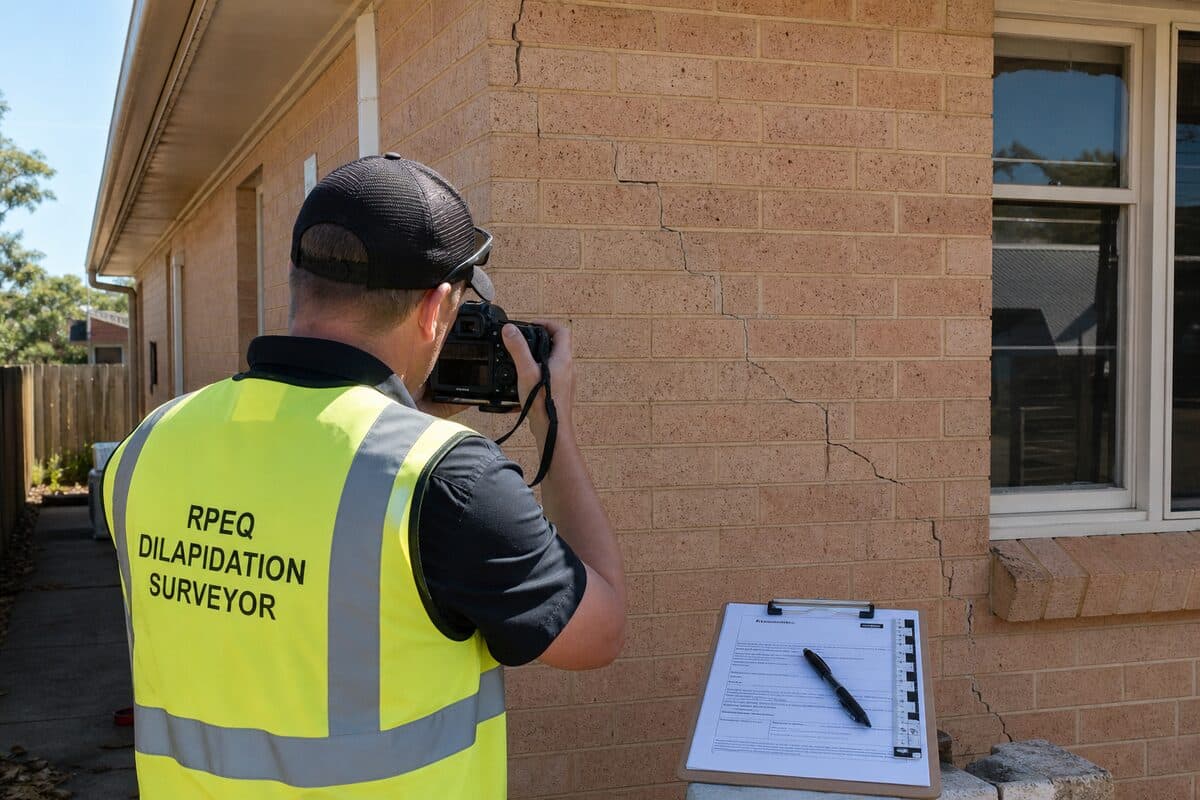
Condition records aligned with SARA and council approvals
RPEQ Dilapidation Surveys
Many projects that require construction or structural monitoring also require a dilapidation survey under SARA or council development approval conditions. In Queensland, that work is commonly specified to be carried out or reviewed by a structural RPEQ so the condition record can be relied on if damage is alleged later.
Oculus combines practical field capture (photography, targeted notes, and where needed crack gauges or datum references) with engineering judgement so the baseline matches the way your monitoring management plan will interpret movement or vibration.
We coordinate timing with your contractor and neighbouring owners, deliver clear annexures for contract documents, and support updates after major construction stages when conditions require them.
Key Features
- ›Structural RPEQ sign-off on methodology and findings
- ›Photographic schedules aligned to monitoring trigger locations
- ›Coordination with monitoring management plans and VMPs
- ›Neighbouring property and heritage-sensitive documentation
- ›Electronic deliverables suitable for approval authorities
- ›Optional pre- and post-construction comparison programmes
Sensor Types
Applications
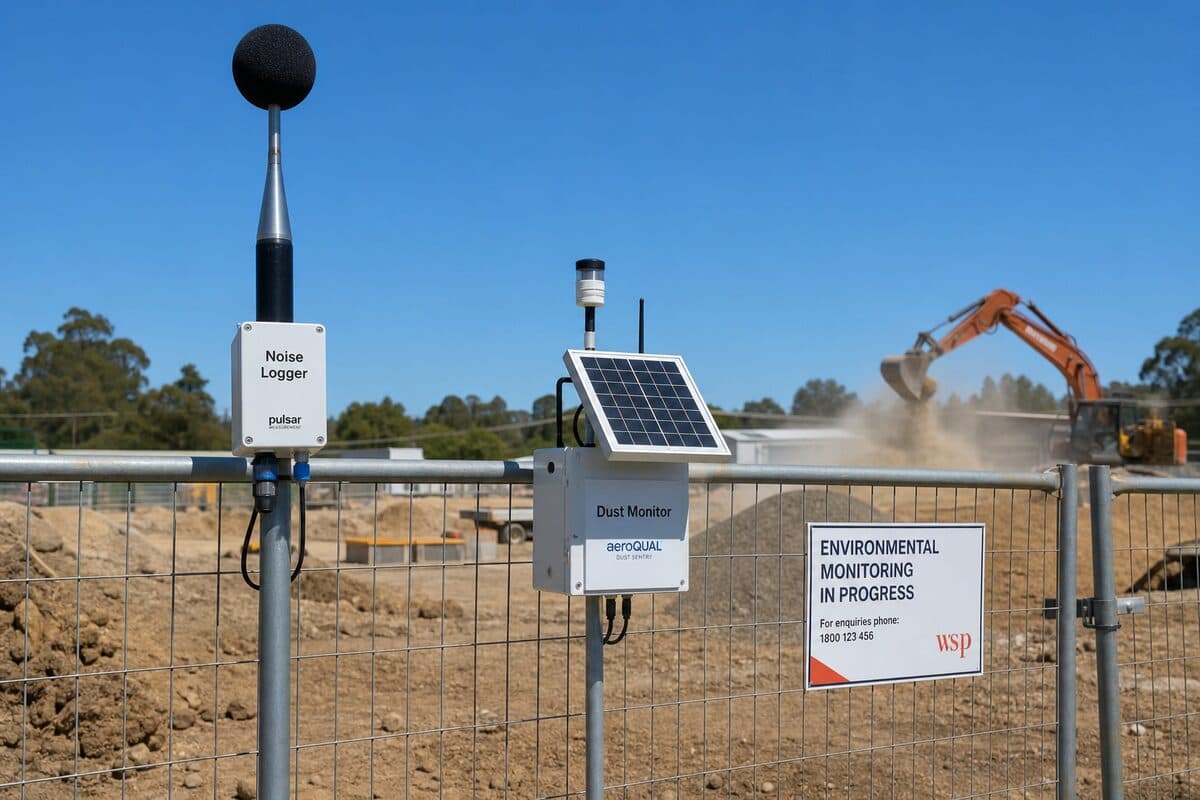
Noise, dust & air quality compliance made simple
Environmental Monitoring
Environmental monitoring is a critical requirement for construction projects, mining operations, and industrial sites. Regulatory bodies mandate continuous monitoring of noise levels, dust emissions, and air quality to protect workers, nearby residents, and the environment.
Oculus deploys IoT-enabled environmental sensors that stream data continuously to our centralised platform. Real-time alerts notify your team when noise or dust levels approach regulatory limits, allowing corrective action before a breach occurs.
Our environmental monitoring services cover the full spectrum: from single-sensor noise monitoring on a residential construction site to multi-parameter environmental programmes for large-scale mining and infrastructure projects.
Key Features
- ›Real-time noise level monitoring (dB)
- ›Dust and particulate matter sensors (PM2.5, PM10)
- ›Air quality monitoring (VOCs, CO, NO2)
- ›Automated EPA and council compliance reporting
- ›Weather-correlated data analysis
- ›Worker exposure monitoring
Sensor Types
Applications
Millimetre-accurate 3D documentation of your assets
LiDAR & Reality Capture
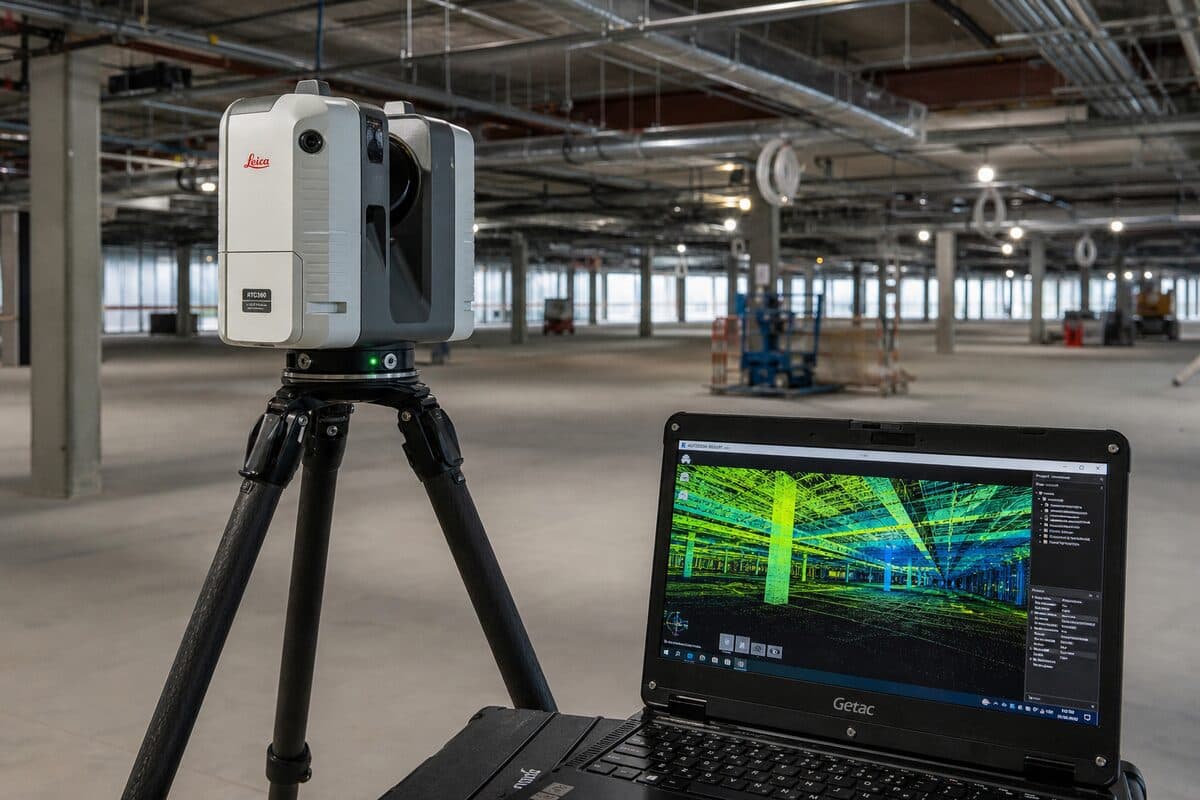
Oculus operates a fleet of industry-leading scanners: Trimble X7, X9 and X12 for terrestrial scanning, NavVis MLX for rapid indoor/outdoor mobile mapping, Leica RTC360 for high-speed capture, and FARO Focus Premium for challenging environments. The right scanner is selected for each project based on accuracy requirements, site access, and capture speed.
Our 3D scanning capabilities support a wide range of applications: as-built documentation for heritage buildings, change detection during construction, volumetric analysis for mining, BIM model creation, and digital twin development for ongoing asset management. Point cloud data is processed using Trimble RealWorks, Leica Cyclone, and Autodesk ReCap Pro.
Deliverables include registered point clouds in E57, LAS, and RCP formats compatible with all major CAD, BIM, and GIS platforms. Teams receive outputs suited to coordination workshops, clash detection, and archival as-built records. Scan data integrates with our continuous monitoring systems to create spatially-referenced digital twins.
Key Features
- ›Trimble X7, X9 and X12 terrestrial laser scanning
- ›NavVis MLX wearable mobile mapping (indoor and outdoor)
- ›Leica RTC360 high-speed scanning (2M pts/sec)
- ›FARO Focus Premium for industrial and challenging environments
- ›As-built BIM model creation (Revit, IFC)
- ›Change detection and volumetric analysis
- ›Digital twin development with monitoring integration
Sensor Types
Applications
Aerial data capture for mapping, inspection, and volumetrics
Drone Survey & Photogrammetry
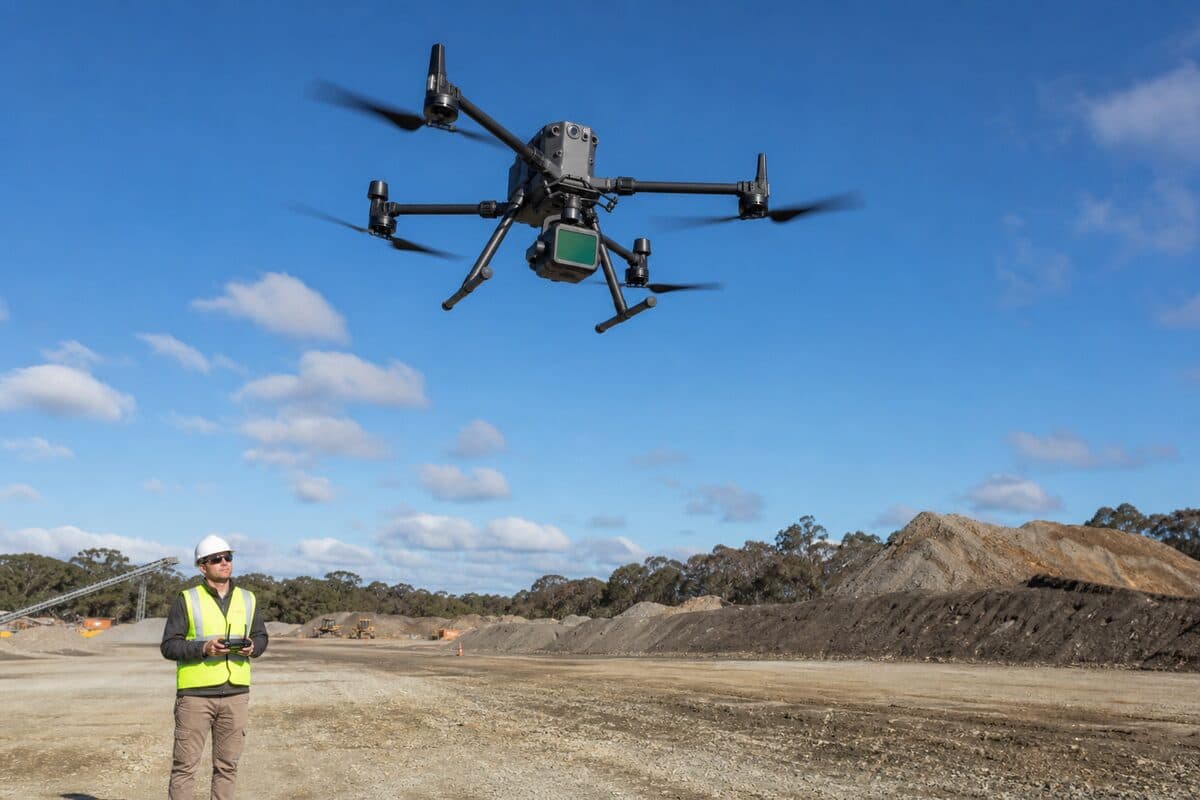
Oculus operates a fleet of DJI enterprise drones including the Matrice 350 RTK for precision survey work and the Mavic 3 Enterprise for rapid site documentation. Payloads include the Zenmuse L2 (aerial LiDAR with 5-return capability) for terrain mapping under vegetation, and the Zenmuse P1 (45MP full-frame photogrammetry camera) for orthomosaic and 3D model generation.
Drone photogrammetry produces georeferenced point clouds, orthomosaics, digital surface models (DSMs), and digital terrain models (DTMs) processed in Agisoft Metashape Professional, Pix4Dmapper, or DJI Terra. PPK/RTK positioning achieves horizontal accuracy of 2 to 3cm and vertical accuracy of 3 to 5cm without ground control points.
Applications include construction progress monitoring, stockpile volumetrics for mining, topographic surveys for civil design, roof condition assessments, aerial building envelope surveys, environmental monitoring, and heritage documentation. Oculus holds CASA-certified remote pilot licences and carries aviation liability insurance for all drone operations.
Key Features
- ›DJI Matrice 350 RTK with PPK/RTK survey-grade positioning
- ›Zenmuse L2 aerial LiDAR (5 returns, 240K pts/sec)
- ›Zenmuse P1 photogrammetry (45MP full-frame, mechanical shutter)
- ›DJI Mavic 3 Enterprise for rapid site documentation
- ›Orthomosaic, DSM, DTM, and 3D model generation
- ›Stockpile volumetric calculations (cut/fill analysis)
- ›CASA-certified pilots with aviation insurance
- ›Processing in Agisoft Metashape, Pix4D, and DJI Terra
Sensor Types
Applications
Next Step
Need a Monitoring Plan?
We can scope your site, map key risks, and provide a deployment plan that aligns with your approvals and construction sequencing.
Contact Oculus